More Than Words

How well can we describe a face? Not well. Even descriptions written by the best novelists fail to give all their readers the same mental image. And if many artists were to paint faces from those descriptions, I wouldn’t bet on the portraits resembling siblings. A picture isn’t worth a thousand words - its worth just isn’t measurable in words at all.
I came up against a related problem while writing the chapter on faces in Dispelling Beauty Lies. I was able to make a few interesting general observations, but girls wanted me to provide details and specifics. I had to decline. Sure, it’s easy to see that some noses look bad on women most of the time, while others look good most of the time; and the jaws that look best on men don’t look best on women. But beyond a few basics it becomes increasingly hard to verbalize what our eyes react to.
A few of my readers are cosmetic surgeons. They have a sophisticated medical vocabulary for describing faces, including all sorts of fancy anatomical words, and they mix quantitative measurements in too. But is that vocabulary really sufficient to explain why someone likes a certain face so much more than other apparently very similar faces - and why others disagree? How can a surgeon know whether a change that helps one face will also help another face with a different configuration of features?
As I talked to these surgeons I realized they filled in the gaps in established knowledge with a sense of artistry. And I could tell they were trying to do their best for their clients. Still, based on what I’d already discovered about types, I wasn’t confident they could give consistently correct answers about faces where finer distinctions were involved, even with the best will in the world. Not only are there more dimensions than the existing vocabulary can readily capture, the large variations in human tastes are relevant too. And that’s a gap artistry can’t fill.
To put all this in perspective, consider facial recognition software. It analyzes hundreds of dimensions to identify a face. Have you tried verbally describing all hundred dimensions of a point in hundred-dimensional space? Well, I have - and it didn’t go well.
Considering the above, it’s easy to understand why machine learning offers us a better approach to facial beauty. Actually, where finer distinctions are concerned it’s the only approach that has any chance of working at all. A machine-learning model doesn’t need to rely on words; and for it, another hundred dimensions are just more ones and zeroes.
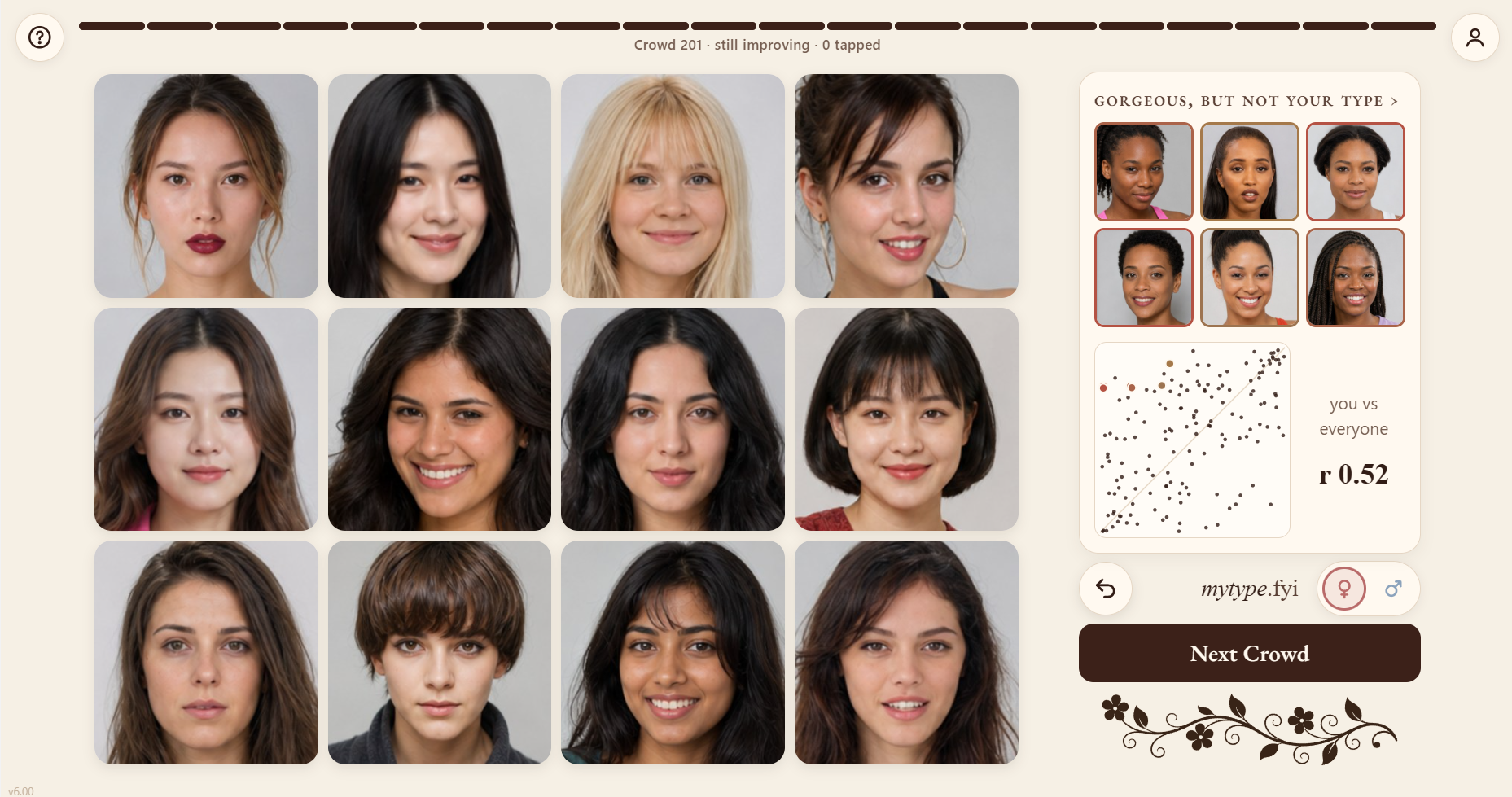
The inadequacy of words is an important reason why the MyType app was created. It uses a sophisticated machine-learning algorithm to model facial beauty without so much as opening a dictionary. A confusing consequence of this - albeit an entirely predictable one given what we’ve observed above - is that the MyType model can understand faces better than we can translate that understanding into language. So it can tell us where a face ranks with the crowd and with an individual user, and generate customized advice on how that face could be improved, even when we can’t explain why any of it is true.
Now to be clear, we do understand how and why machine learning works. It’s at the level of faces themselves that our understanding breaks down. You can think of it this way: instead of shooting in the dark, we’re building a precision instrument that can see in the dark and shoot for us. Knowing without understanding why isn’t something we’re used to. But in the machine-learning era, we’re going to have to get used to it.
To illustrate, let’s have a look at a few real examples from users’ MyType results.
These aren’t my favorite faces, but according to the MyType model, I rate them significantly higher than everyone else does. Why, exactly?
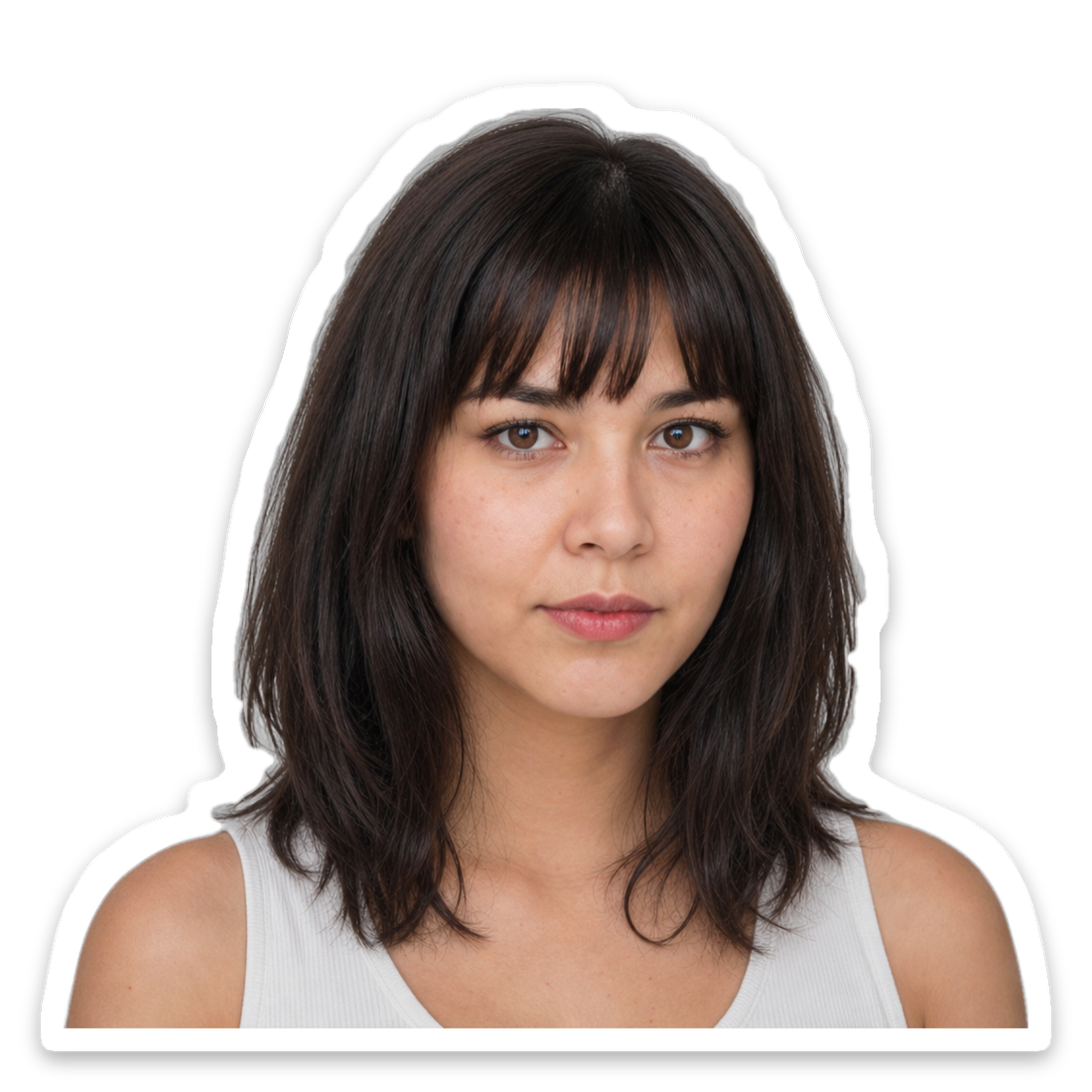
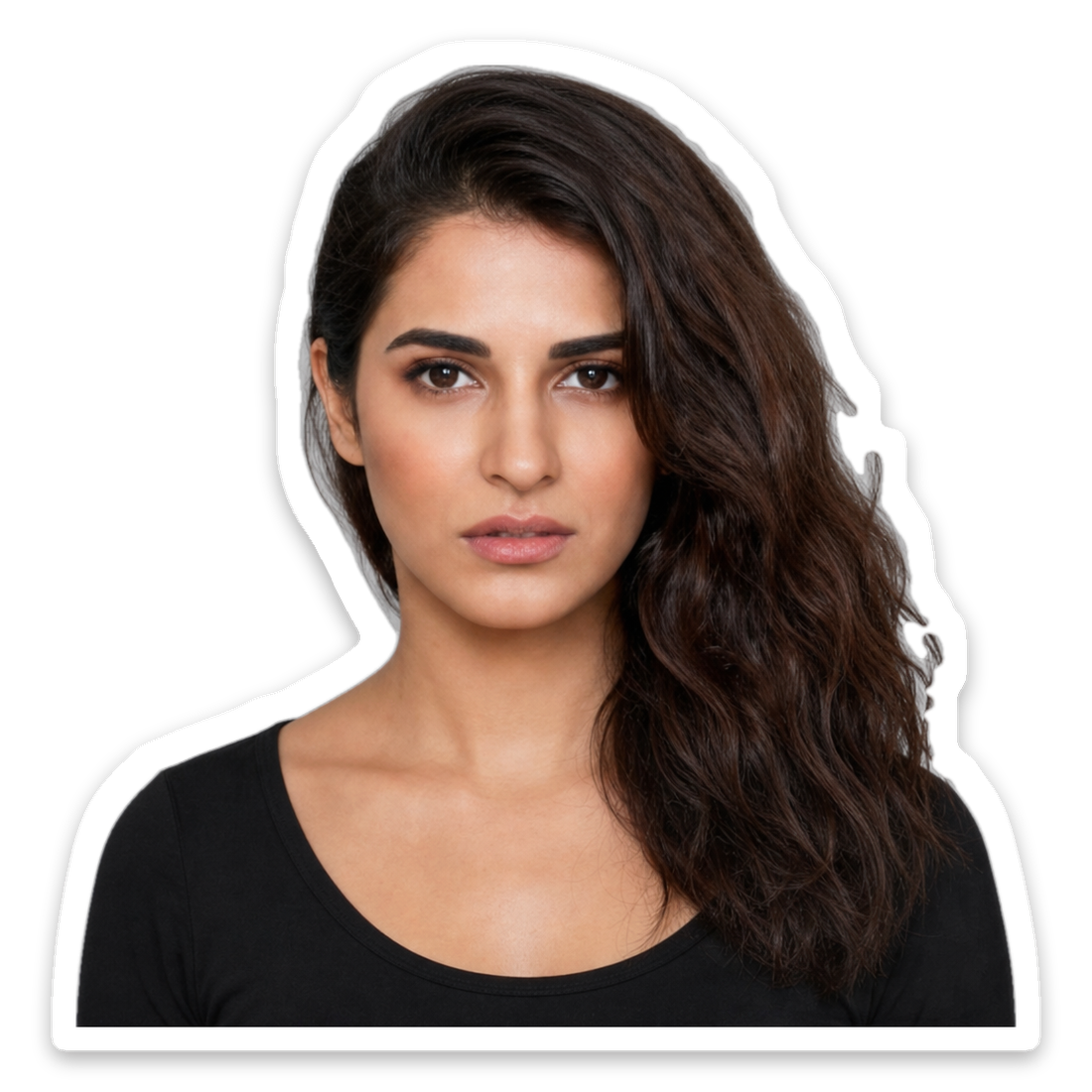

Well, we can all see they have dark hair. But plenty of popular faces do too. We can also see two of them have a similar structure. But there are popular faces that also have this structure - and plenty of faces I like are popular. Beyond that it gets hard to describe why it is that I like these particular faces so much more than the crowd does. A precise explanation would entail comparing multiple hundred-dimensional objects, which isn’t my idea of a good time. But the fact is, we don’t actually need to. The model knows what it knows. And when all the dimensions are calculated, this is the tale the data tells us.
Here are equivalent sets of faces from two more users’ results.


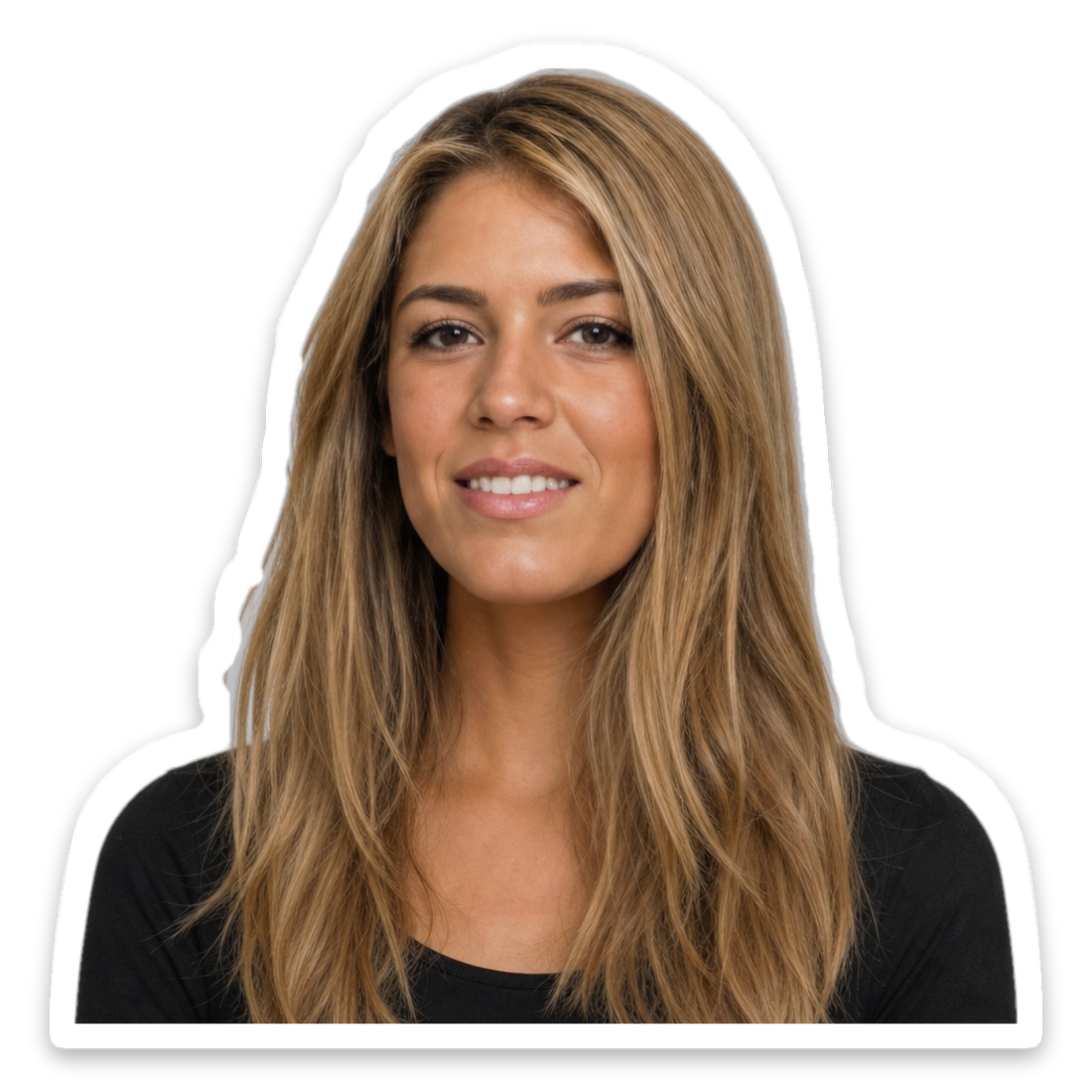
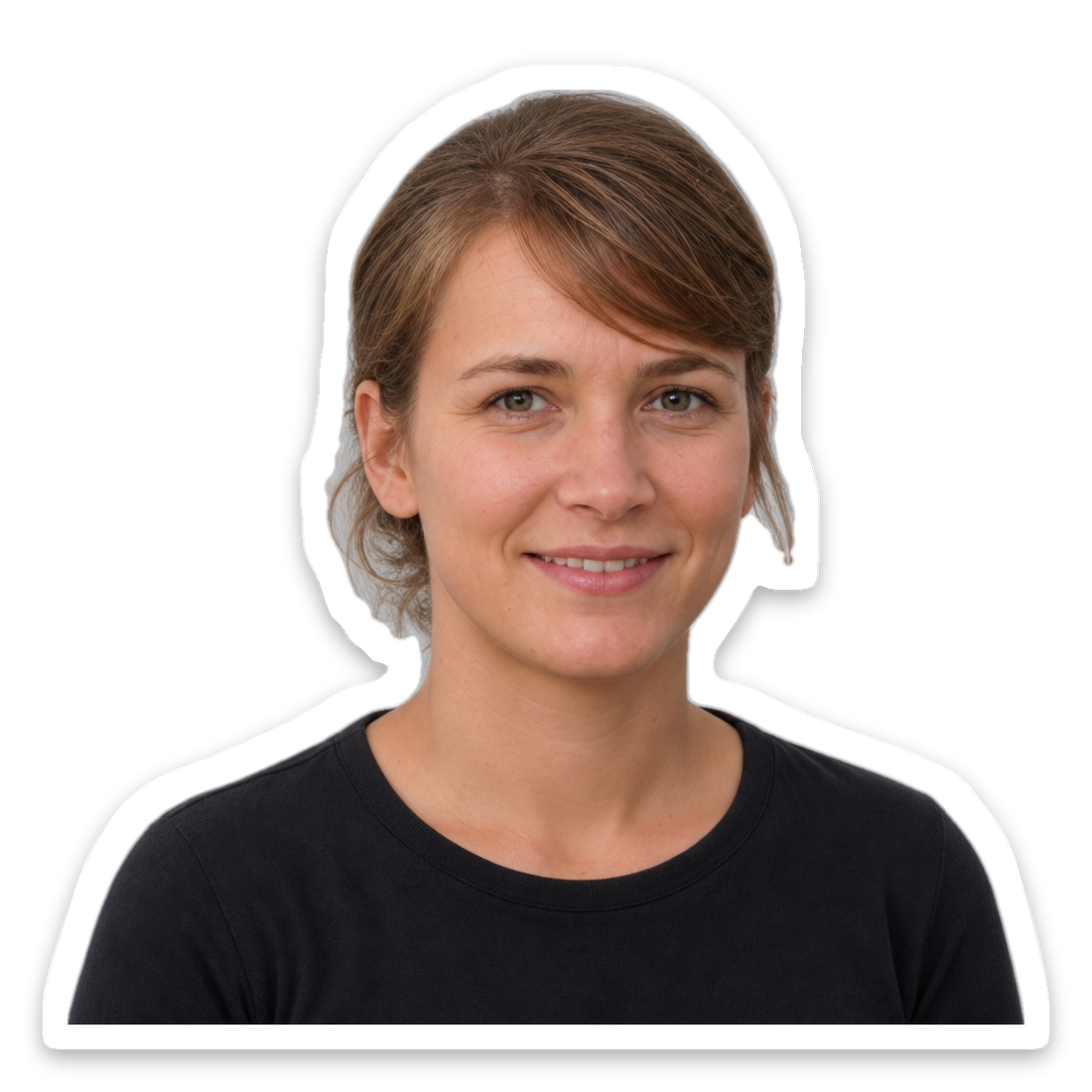
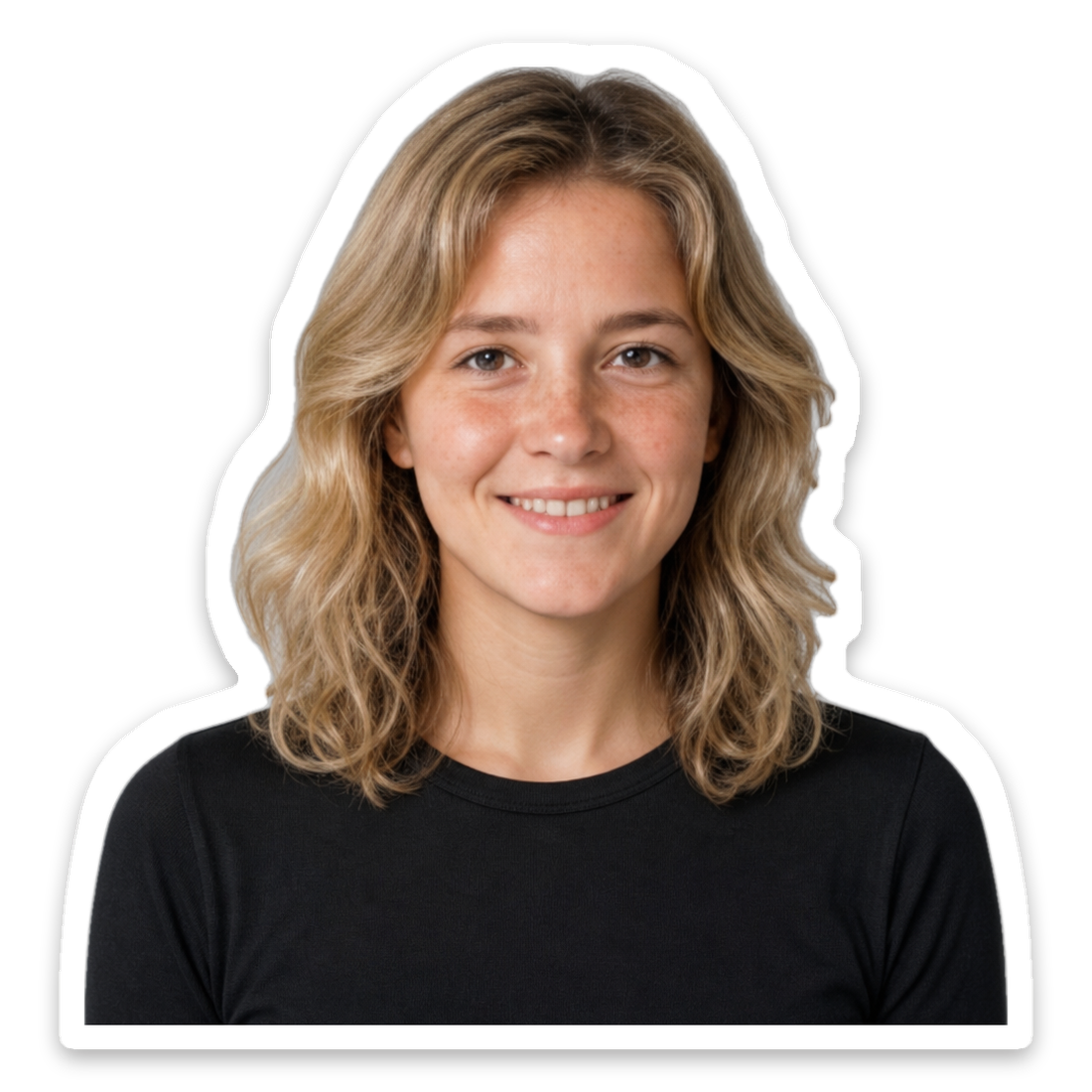

Once again, we can see the similarities: as I’ve covered in other blog entries, people really do have types. But explaining in sufficient detail why these two users like these faces more than others do is much harder. And once again, we don’t actually need to explain. Knowledge is what matters most: understanding is… just a tedious hobby for people who don’t know how to surf, can’t afford to ski, and are too sensitive for monster-truck racing.
MyType rightly puts the focus on our individual types. However, similar issues persist when we look at the most broadly popular faces - some of which you can see below.
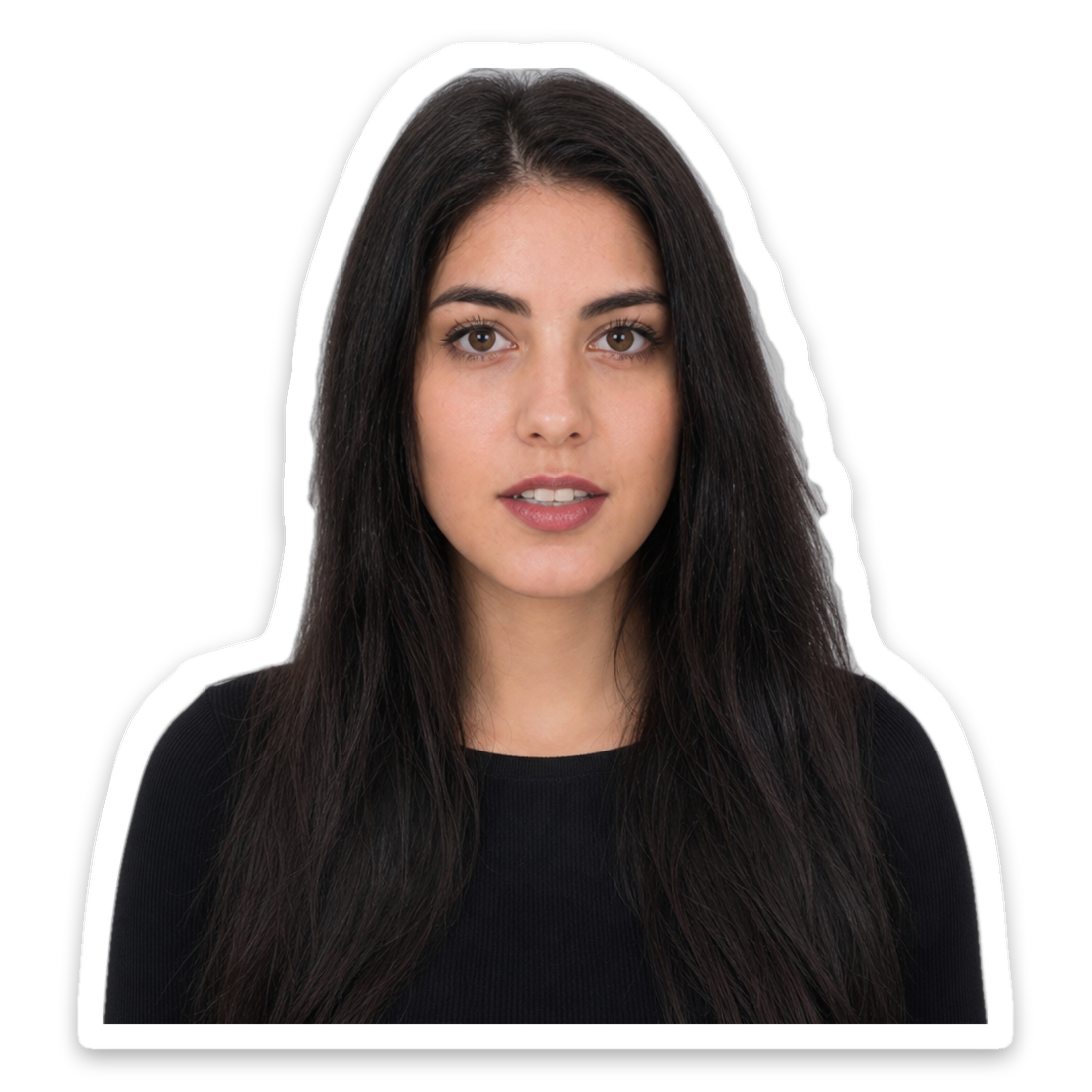
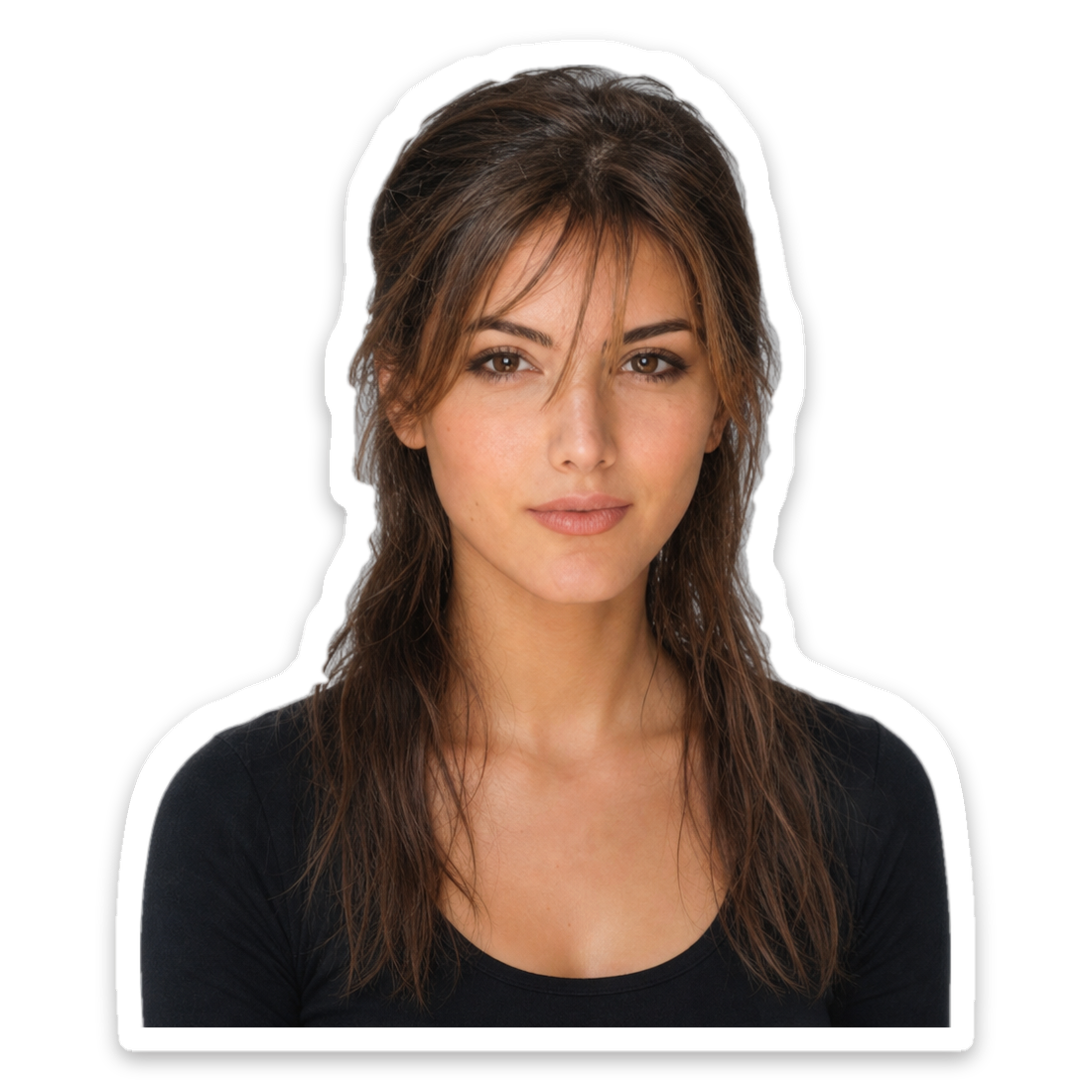

You’ll notice all three of these popular faces have different noses. Now, how can we make sweeping, general claims about noses when obviously different noses seem to suit different faces quite well? How do we know what to advise when one man likes the nose at the left and the other one likes the nose at the right? That data doesn’t even exist in academic studies to the necessary resolution.
For a machine-learning model, these human aporias are irrelevant. It doesn’t need to come up with a few general rules of thumb, because it can calculate the relationships between all the dimensions of each face, and figure out which nose best suits it for which suitor. Whether it can articulate that relationship to us in words or not.
After you take the MyType quiz and examine your results page, you may notice the verbal labels applied to the faces don’t always describe them quite the way you would. Occasionally they’re just plain wrong. But once again, the model knows more than words can say. The verbal descriptions that appear in the app are generic labels applied by image-identification software after the fact, not by the MyType model itself. They’re only there for fun. The model doesn’t use labels or descriptions to understand your type, because its direct, nonverbal understanding of faces is better than any intelligence - human or AI - can currently achieve with words.
As more people use MyType, I hope I’ll be able to translate more of the resulting data into general theories. Understanding might be a tedious hobby, but good hobbies can be hard to come by - and in that light I hope you’ll keep reading. On a practical level though, I advise you against worrying about words more than you need to. The answers are what you can use. Try the MyType quiz, and in fifteen minutes, you’ll have them.